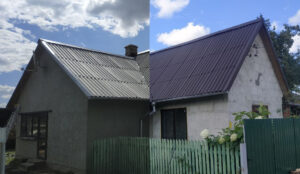
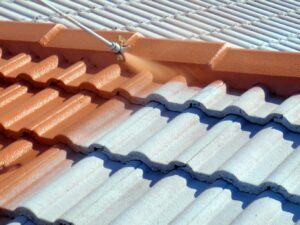
Slate, ceramic tiles, and mineral tiles remain among the most popular roofing materials in Europe - valued for their natural appearance and long service life. Yet even these hard-wearing materials are not immune to the elements. Over the years, porous tile surfaces absorb rainwater, which leads to frost damage in winter, moss and algae growth, surface flaking, and a steady decline in both performance and appearance.
Replacing an entire slate or tile roof is expensive and disruptive. A far more practical solution is to coat the existing surface with a high-performance rubber paint for roof tiles - and that is exactly what Silk Plaster Rubber Paint was designed to do.
What Is Silk Plaster Rubber Paint?
Silk Plaster Rubber Paint is a water-based elastomeric roof coating that cures into a tough, flexible membrane. Unlike standard masonry or roof paints that sit rigidly on the surface and crack as tiles expand and contract, this rubber-polymer coating stretches and recovers with every thermal cycle - keeping the protective seal intact season after season.
Key properties that make it the ideal rubber paint for slate and ceramic roofing:
Elastomeric flexibility - bridges hairline cracks and absorbs thermal movement without splitting
UV resistant - pigments and polymer binders are formulated to resist fading, chalking, and degradation from prolonged sun exposure
Waterproof yet breathable - blocks rainwater penetration while allowing trapped moisture vapour to escape from within the tile
Excellent adhesion - bonds firmly to slate, clay, concrete tiles, and other mineral roofing substrates
Durable coating - withstands years of wind, rain, hail, frost, and UV without peeling or flaking
Rubber Paint for Slate Roofs
Natural slate is one of the longest-lasting roofing materials available, but it is also one of the most porous. Over decades, moisture absorption weakens the internal structure of individual slates, causing delamination - the characteristic flaking that signals a roof nearing the end of its useful life.
Applying Silk Plaster Rubber Paint to a slate roof seals the surface against moisture while preserving the slate’s natural ability to release trapped vapour. The UV-resistant elastomeric coating also prevents the sun from accelerating deterioration on south-facing pitches, and the flexible film absorbs the constant micro-movements that occur as slates warm and cool throughout the day.
The result: a slate roof that looks refreshed, sheds water effectively, and gains years - sometimes decades - of additional service life, all without the cost and waste of a full re-roofing project.
Rubber Paint for Ceramic and Clay Roof Tiles
Ceramic and clay tiles are prized for their rich colour and classic profile, but their glazed or semi-glazed surfaces can become pitted and porous over time. Once the factory finish wears down, tiles absorb water rapidly - and in freezing climates the resulting ice expansion cracks tiles from the inside out.
Silk Plaster Rubber Paint restores the waterproof barrier with a seamless, durable coating that moves with each tile. Because the product is available in a range of colours, it can match or refresh the original appearance of terracotta, red, brown, and charcoal roof tiles. Its strong adhesion means the coating will not lift at the edges even on exposed, wind-swept roof surfaces.
Rubber Paint for Concrete and Mineral Roof Tiles
Concrete roof tiles are more affordable than natural slate or clay, but they are also the most susceptible to moss growth and surface degradation. The rough, open-pored texture of concrete gives moss and lichen an easy foothold, which traps moisture and accelerates damage.
After thorough cleaning and moss removal, a two-coat application of Silk Plaster Rubber Paint creates a smooth, water-repellent surface that discourages biological growth. The elastomeric roof coating also conceals minor surface imperfections and gives ageing concrete tiles a uniform, clean finish.
Beyond Roofing - External Renders and Interior Use
While slate and tile roofing is the primary application for Silk Plaster Rubber Paint, the same properties that protect a roof make it equally effective on other surfaces:
External Renders and Facades
Cement renders, lime plasters, and exposed brickwork all benefit from an elastomeric coating that bridges cracks and blocks rain. Applied to external walls, Silk Plaster Rubber Paint provides the same UV-resistant, waterproof-yet-breathable protection it delivers on rooftops - keeping facades looking fresh and structurally sound for years.
Internal Walls and Damp-Prone Areas
Indoors, the rubber paint is a practical solution for basements, utility rooms, and any wall subject to condensation or rising damp. Its waterproof film seals the surface, while the breathable formulation prevents moisture from becoming trapped behind the coating. Because it is water-based and low-odour, it can be applied safely in occupied buildings.
Multi-Substrate Versatility
In addition to mineral and ceramic surfaces, Silk Plaster Rubber Paint adheres to metal, wood, and plastic - making it a convenient single-product solution for renovation projects that span multiple materials.
How to Apply Silk Plaster Rubber Paint to Roof Tiles
A successful roof coating starts with proper preparation:
Clean the roof - remove moss, algae, lichen, dirt, and any loose or flaking material using a pressure washer or stiff brush
Repair damaged tiles - replace cracked or broken tiles and re-bed any that have slipped
Allow the surface to dry - the substrate must be dry before coating for optimal adhesion
Apply a primer (if needed) - on very porous or chalky surfaces, a primer coat improves bonding
Apply the first coat of Silk Plaster Rubber Paint by brush, roller, or airless spray
Allow to dry (typically 2-4 hours depending on temperature and humidity)
Apply the second coat - two coats are always recommended for roof applications to ensure a continuous, durable membrane
Key Benefits at a Glance
Feature
Why It Matters for Roofing
Elastomeric rubber film
Stretches with tile movement - no cracking or peeling
UV resistant
Colour stays true for years, even on exposed south-facing roofs
Waterproof & breathable
Stops rain penetration while letting tiles release trapped moisture
Strong adhesion
Bonds to slate, ceramic, concrete, and mineral tiles
Durable coating
Withstands frost, hail, wind, and thermal cycling
Multi-substrate use
Also works on renders, metal, wood, and plastic surfaces
Extend Your Roof’s Life - Order Today
Don’t replace your roof when you can restore it. Browse the full Silk Plaster Rubber Paint range to find the right product for your slate, ceramic, or concrete tile roof. For project advice and trade pricing, contact our team.
Silk Plaster Rubber Paint - the UV-resistant, elastomeric roof coating that protects slate, ceramic, and mineral tiles from the elements while keeping them looking their best.
To provide the best experiences, we use technologies like cookies to store and/or access device information. Consenting to these technologies will allow us to process data such as browsing behavior or unique IDs on this site. Not consenting or withdrawing consent, may adversely affect certain features and functions.
Functional
Always active
The technical storage or access is strictly necessary for the legitimate purpose of enabling the use of a specific service explicitly requested by the subscriber or user, or for the sole purpose of carrying out the transmission of a communication over an electronic communications network.
Preferences
The technical storage or access is necessary for the legitimate purpose of storing preferences that are not requested by the subscriber or user.
Statistics
The technical storage or access that is used exclusively for statistical purposes.The technical storage or access that is used exclusively for anonymous statistical purposes. Without a subpoena, voluntary compliance on the part of your Internet Service Provider, or additional records from a third party, information stored or retrieved for this purpose alone cannot usually be used to identify you.
Marketing
The technical storage or access is required to create user profiles to send advertising, or to track the user on a website or across several websites for similar marketing purposes.