No black marks - even with slightly dry material or late passes, Silk Plaster’s white-base microcement avoids the costly rework caused by trowel marks on finish coats.
Pre-mixed beats dry mix - factory-finished product delivers batch-to-batch consistency that on-site mixing can’t match, saving time and reducing errors.
Price-to-quality leader - professional-grade performance at a price point that wins tenders and protects margins.
“I like it so much. It’s very soft, very easy to apply. One of the best - to be honest.” - Gediminas, Master Applicator, Norway
Who Is Gediminas?
Gediminas is a master decorative finishes applicator based in Norway, with years of hands-on experience across microcement systems, Venetian plaster, and specialist wall coatings. He’s not affiliated with Silk Plaster. His Instagram Profile is here. He doesn’t get paid to say nice things. He’s tried the competition - and he’s direct about what he thinks. That’s exactly why we sat down with him. In this conversation, recorded as part of our Professionals Speak series, Gediminas talks through the technical side of working with Silk Plaster microcement: open time, black mark resistance, the pre-mixed vs dry-mix debate, varnish performance, and what it actually costs when things go wrong on a high-end floor.
The Honest Starting Point
We didn’t ask Gediminas to come in with praise prepared. And he didn’t. “I have tried many of them,” he says early in the conversation, referring to microcement systems from multiple manufacturers. “The first one of yours - I have to say, I didn’t like it.” He came back anyway. Because when Silk Plaster reformulated - moving from the original yellow-base system to the current white-base formula - Gediminas noticed the difference immediately. “When you changed to the new one, the white one - I actually wouldn’t change anything else. I like it so much.” That kind of turnaround doesn’t come from marketing. It comes from a formulation that performs differently under professional conditions: trowel pressure, open time, edge behaviour, and the critical moment when material meets tool on a corner.
The Black Mark Problem (And Why It Matters More Than You Think)
If you’ve worked with microcement, you know the fear. You’re on the final coat - the finish layer - and the edge of your trowel catches wrong. A black mark. A shadow in the surface. On most systems, that’s a wall. Not a corner. A wall. Corner to corner, you redo it - because microcement doesn’t spot-repair invisibly. The structure, the texture, the sheen will never match. If the project is a white villa floor, the stakes are even higher. Gediminas was explicit about this: “With your finished microcement, you don’t get black marks - even if you work with slightly drier material, even if you come back a little late. It’s not leaving black marks. Competitors - yes, there are good materials on the market - but compare the prices. You are at the top.” The technical reason: the white-base formula in Silk Plaster’s current microcement system has a longer effective working window and a more forgiving surface tension during burnishing. The material stays workable at the edges without oxidising against steel tools - the primary cause of black marks in competitive systems. For applicators pricing projects, this isn’t a minor technical footnote. Black marks on a finish coat mean:
Sanding back to base (you can’t spot-fix without visible joins)
Reapplication of all finish coats, corner to corner
Delay, additional labour cost, and a difficult client conversation
Avoiding them entirely isn’t just a quality preference - it’s a direct cost saving per project.
Pre-Mixed vs Dry Mix - The Professional’s Verdict
The industry is split. Some manufacturers supply microcement as a dry powder that applicators mix on site. Others, like Silk Plaster, supply a factory-finished ready-to-use product. Gediminas has worked with both. His conclusion is unambiguous: “A finished product is always better. When you mix yourself, sometimes you add too little water, sometimes too much. It depends on how you mix. You can get dry pieces in the mix - and that disturbs the work. It’s always harder when you mix yourself, even with more water. If it’s already done in factory machinery, it’s always better.” The implication for professionals is practical: pre-mixed means consistency batch to batch, project to project. On a large floor or a multi-room commercial job, that consistency is the difference between a seamless result and a visible join where the second bucket mixed slightly different from the first. “It’s easier and it avoids mistakes. Time is money - especially in our business.”
The Varnish Question
Two-component varnish over microcement is where many projects get nervous. The chemistry is less forgiving than the base coats, the window for error is shorter, and on high-traffic floors, the stakes are visible for years. Gediminas was characteristically direct: “I tried it. I had things to complain about. But you guys do very good work in fixing problems. And now it’s really good.” The 2K varnish in the current Silk Plaster system has been refined through exactly this kind of professional feedback loop - real applicators, real projects, real problems escalated and resolved. The result is an extended open time that allows proper cross-hatching on large floor areas without cold joins in the varnish film. His largest varnish project: a complete villa floor in white microcement. A reconstruction job, fixing the work of a previous applicator. “White microcement is not easy. And fixing someone else’s work is always harder than starting from scratch. But we made a good deal. I think I did quite good work.”
Price to Quality - The Professional’s Bottom Line
We pushed Gediminas for a direct comparison. “Can I say our microcement is top-notch - like a Mercedes?” His answer was measured and honest: “I haven’t tried all of them. Same as with cars, you can’t try all of them. It’s about taste. But - one of the best. Yes.” And on price: “Compare the prices. You are at the top.” In a product category where the cheapest systems can create expensive rework situations, and where the premium systems can price a contractor out of a job, Silk Plaster sits in the position that professionals actually look for: a price that wins the tender, and a quality that protects the margin.
“This is not a prepaid campaign. I didn’t get gifts. Price and quality - it’s good.” - Gediminas, Norway
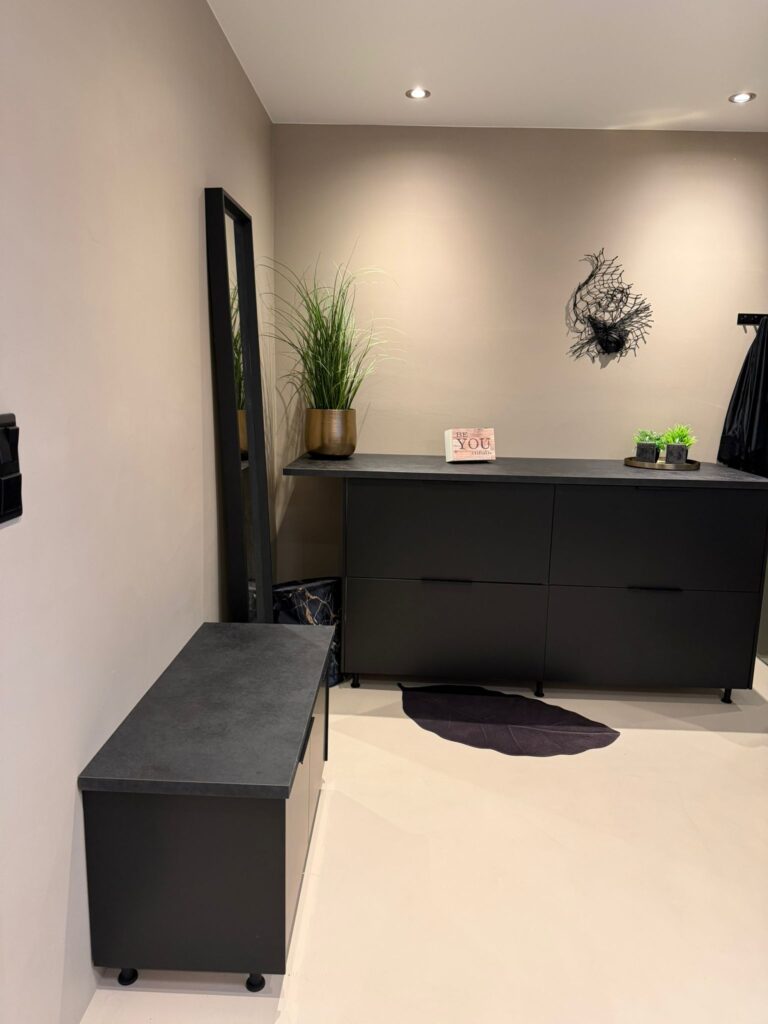
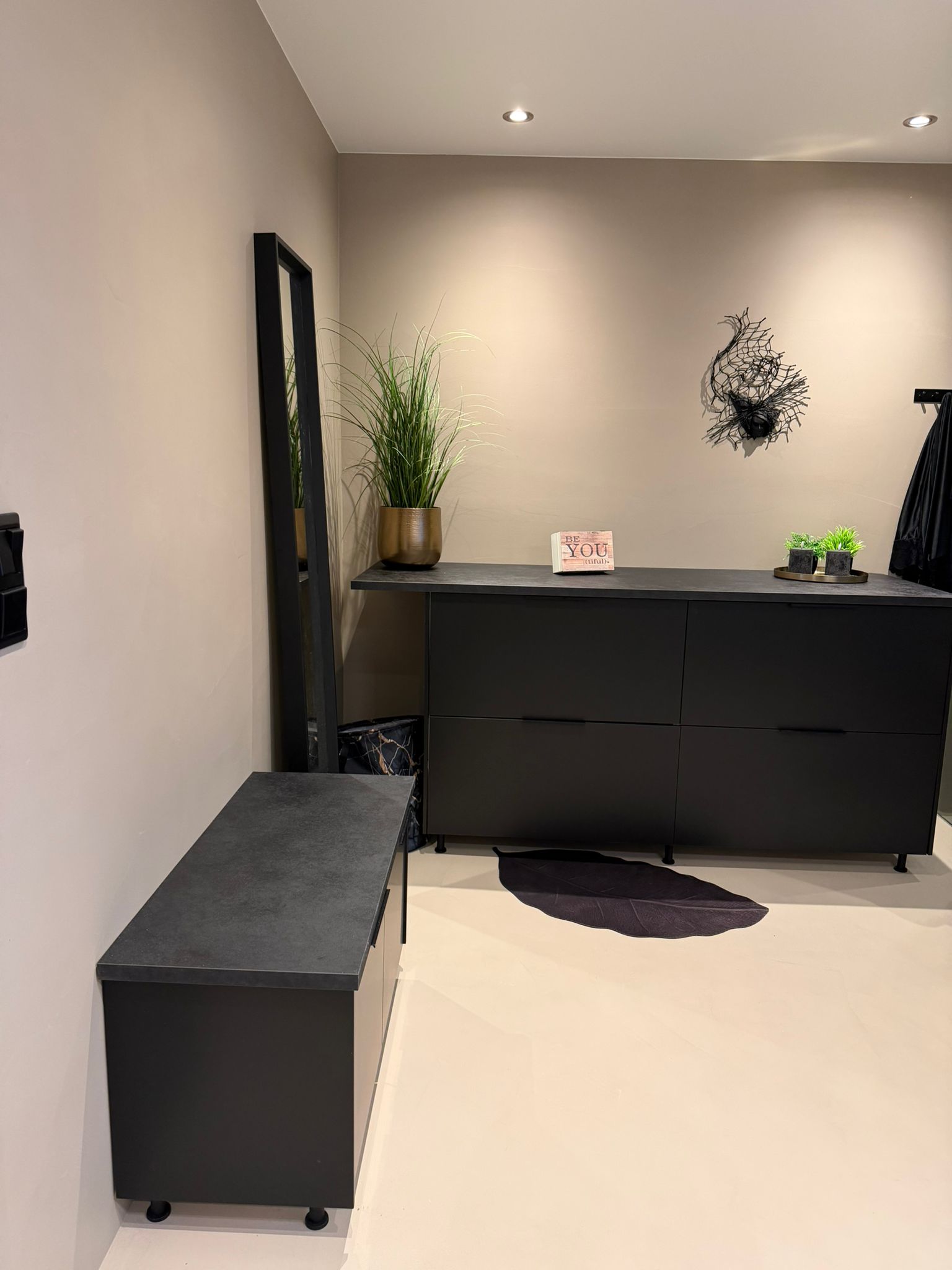
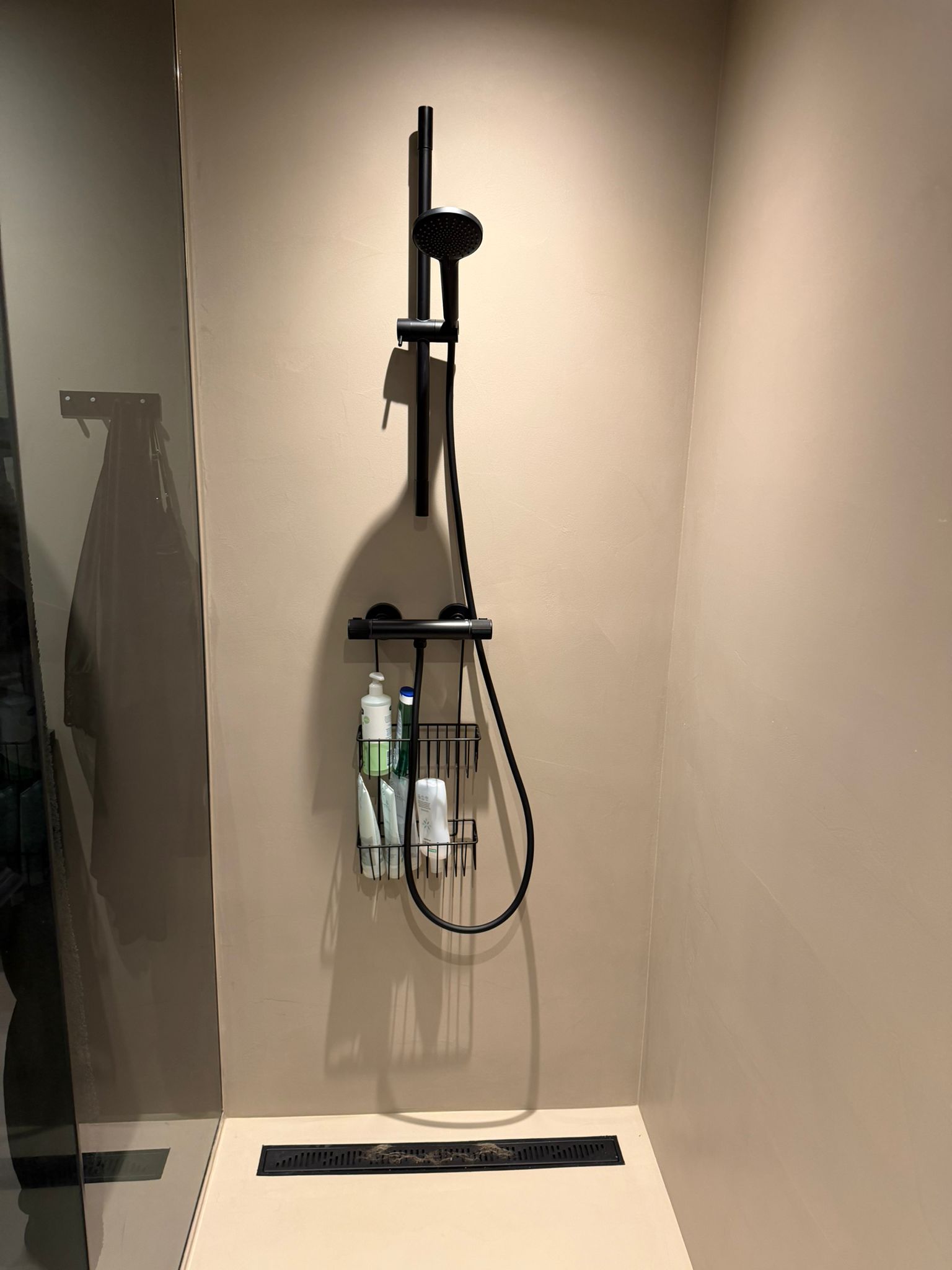
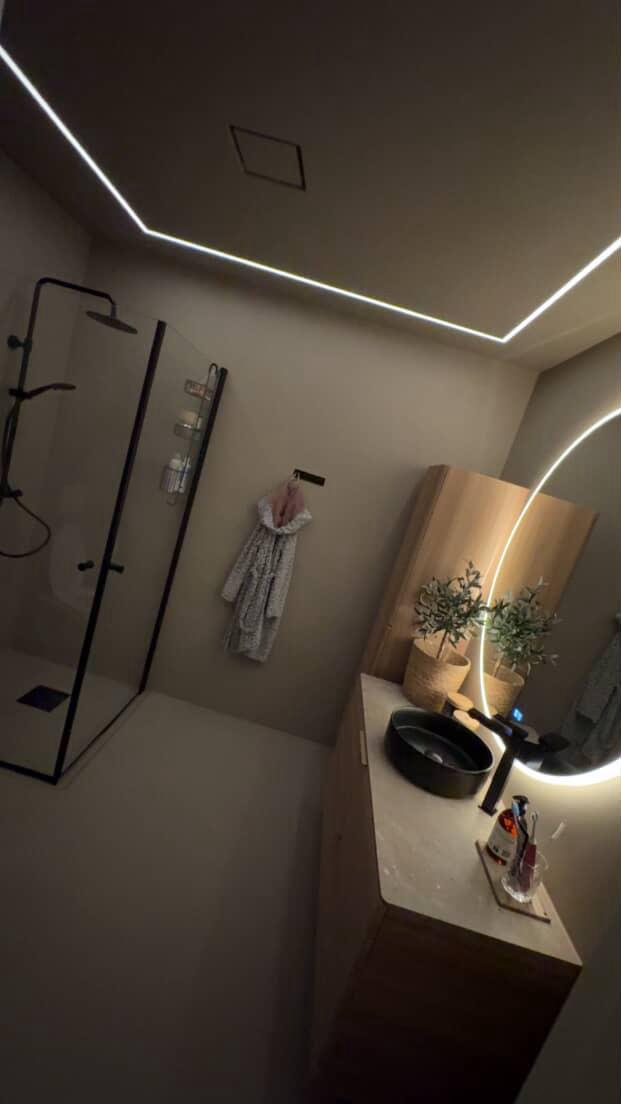
Below are photos from Gediminas’s completed microcement bathroom project in Norway - from bare walls during construction to the finished space with seamless microcement on walls, floors, and shower areas.
The Finished Microcement project with wet areas and bathroom
Microcement bathroom project completed by Gediminas in Norway - featuring seamless walls and floor with modern fixtures.
SILK PLASTER Microcement during Construction
Finished Details of seamless Microcement from Silk Plaster
To provide the best experiences, we use technologies like cookies to store and/or access device information. Consenting to these technologies will allow us to process data such as browsing behavior or unique IDs on this site. Not consenting or withdrawing consent, may adversely affect certain features and functions.
Functional
Always active
The technical storage or access is strictly necessary for the legitimate purpose of enabling the use of a specific service explicitly requested by the subscriber or user, or for the sole purpose of carrying out the transmission of a communication over an electronic communications network.
Preferences
The technical storage or access is necessary for the legitimate purpose of storing preferences that are not requested by the subscriber or user.
Statistics
The technical storage or access that is used exclusively for statistical purposes.The technical storage or access that is used exclusively for anonymous statistical purposes. Without a subpoena, voluntary compliance on the part of your Internet Service Provider, or additional records from a third party, information stored or retrieved for this purpose alone cannot usually be used to identify you.
Marketing
The technical storage or access is required to create user profiles to send advertising, or to track the user on a website or across several websites for similar marketing purposes.